Sacre
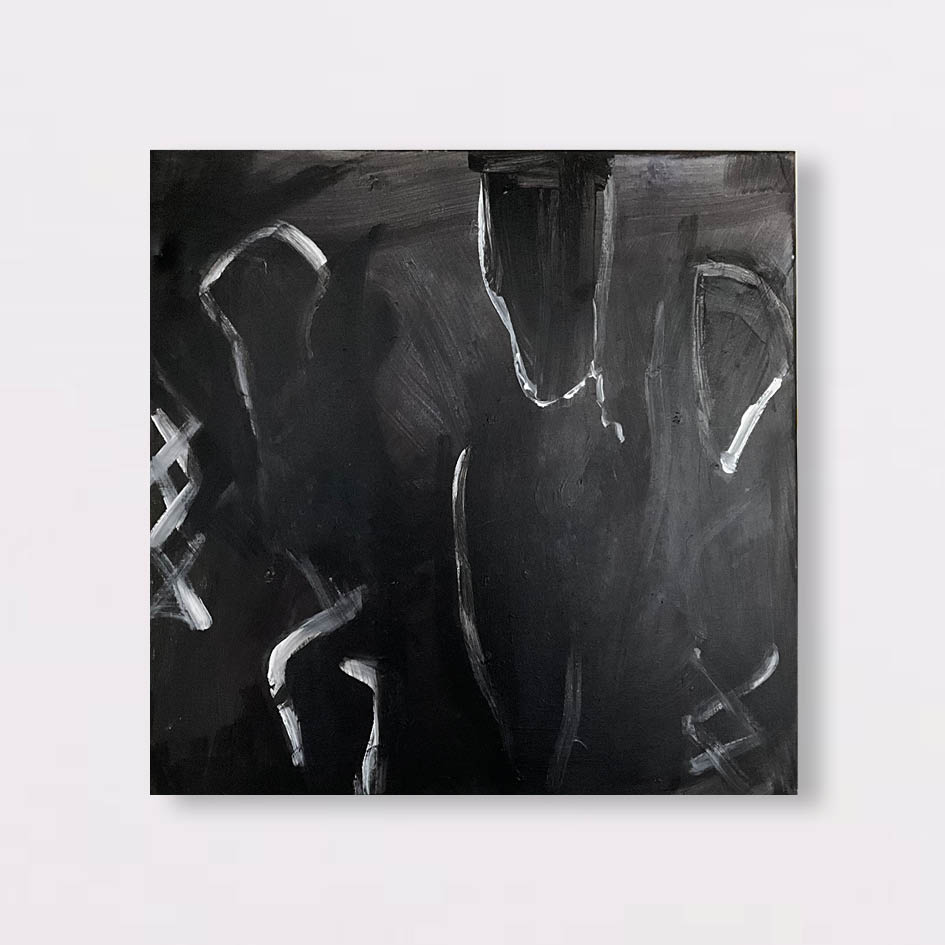
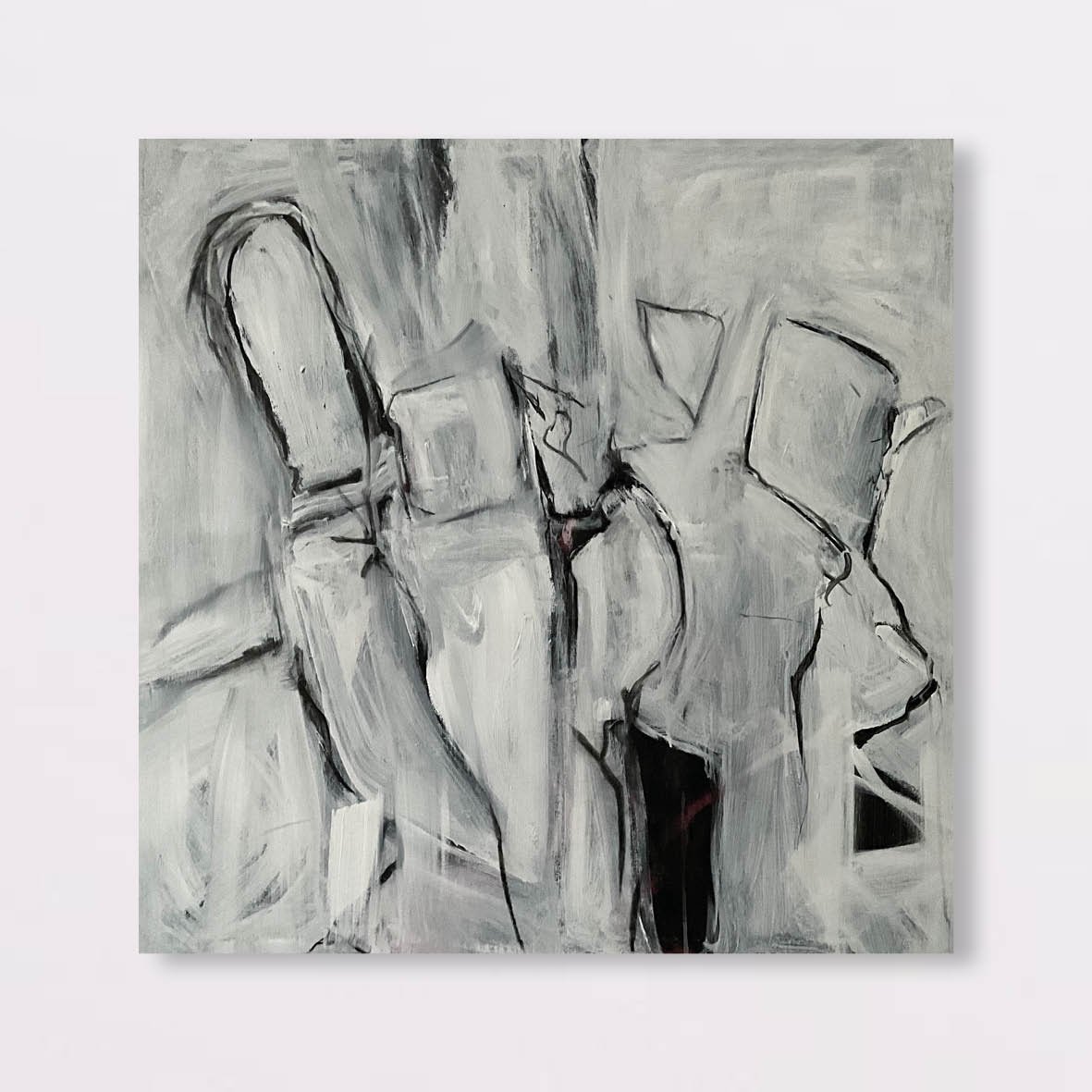
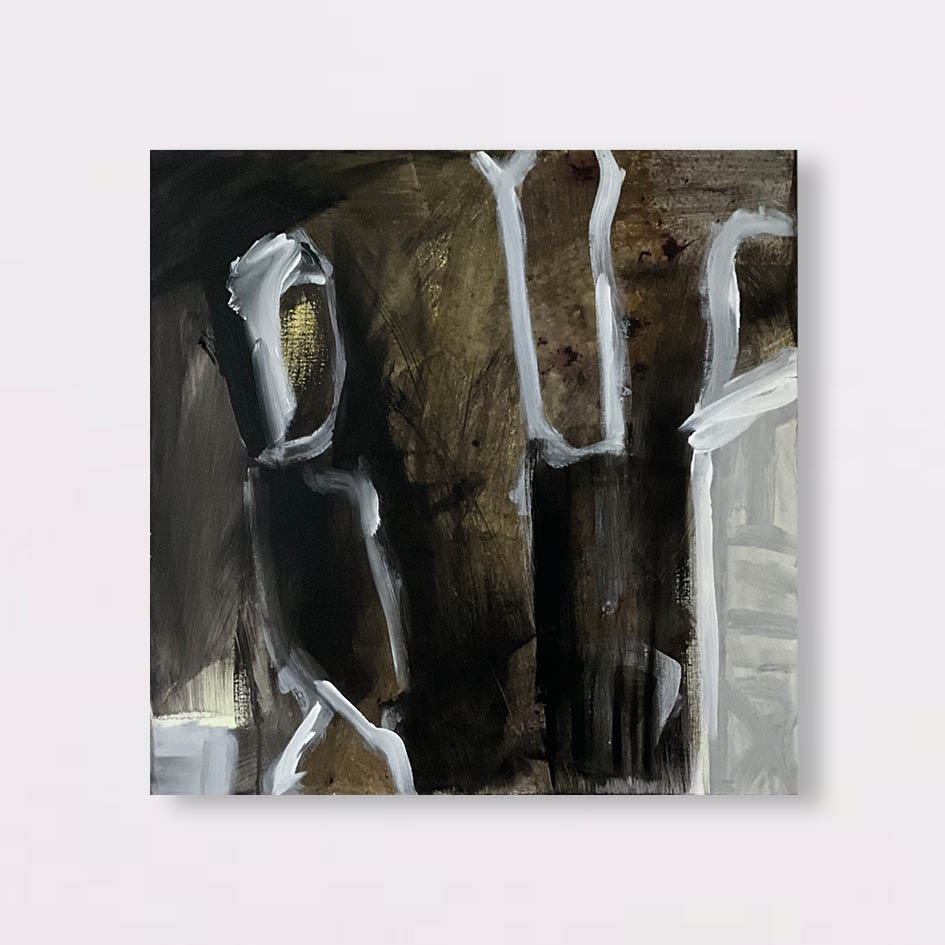
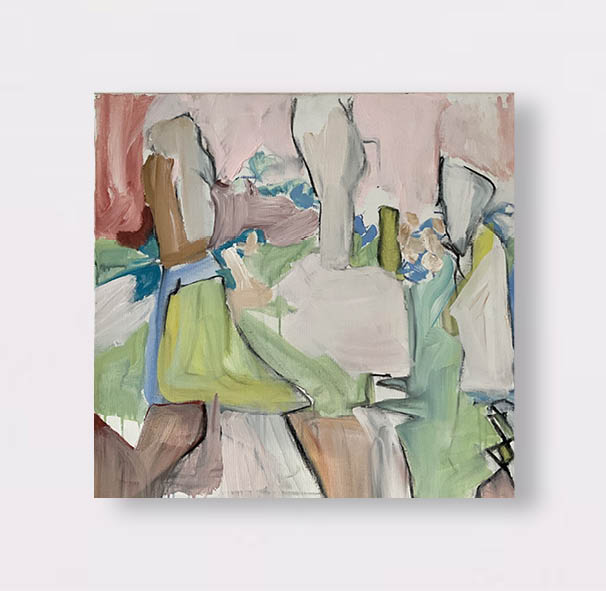
The title Sacre refers to Le Sacre du Printemps (1913) by Igor Stravinsky, originally composed for the Ballets Russes. In this music, rhythm and raw power take center stage, while melody recedes into the background – something that shocked audiences at the time. The composition forms the point of departure for a series of four paintings in which movement, intensity, and rhythm become tangible in every brushstroke.
The works Noir and Blanc are executed in black and white, inspired by the historical black-and-white imagery of the original ballet. In Jaune, yellow is introduced, while Couleur is rendered in a restrained color palette. Graphic, cross-like marks within the paintings refer to the ribbons with which the ritual dancers’ legs were wrapped.
The paintings were created in the rhythm of the music itself – as a form of action painting – and invite the viewer to experience the power and physicality of Sacre in a visual way.
The title Sacre refers to Le Sacre du Printemps (1913) by Igor Stravinsky, originally composed for the Ballets Russes. In this music, rhythm and raw power take center stage, while melody recedes into the background – something that shocked audiences at the time. The composition forms the point of departure for a series of four paintings in which movement, intensity, and rhythm become tangible in every brushstroke.
The works Noir and Blanc are executed in black and white, inspired by the historical black-and-white imagery of the original ballet. In Jaune, yellow is introduced, while Couleur is rendered in a restrained color palette. Graphic, cross-like marks within the paintings refer to the ribbons with which the ritual dancers’ legs were wrapped.
The paintings were created in the rhythm of the music itself – as a form of action painting – and invite the viewer to experience the power and physicality of Sacre in a visual way.